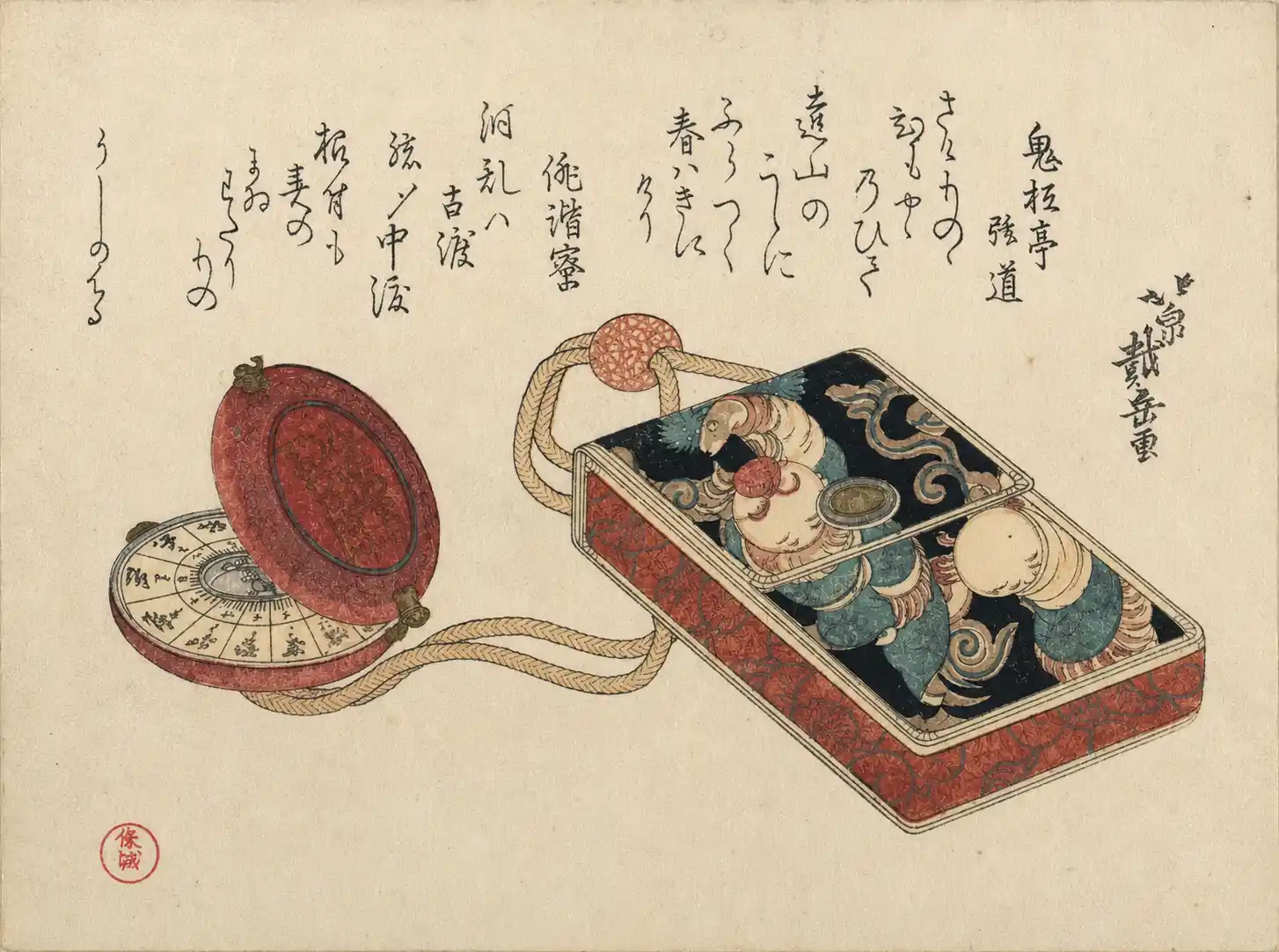
Somewhere beyond the shoji screen, someone ground ink in silence. The sound was slow, circular, patient — like a night refusing to end. Far away, a shamisen faded into the dark streets of Edo, thin as dying fire.
On the table rested a small inrō.
Black lacquer. Gold edges. A smiling spirit hidden beneath worn pigments. Its face looked drunk with secrets. Beside it lay a red compass disk, opened carefully, exposing delicate directional marks worn pale by human hands.
Not a toy.
Something carried by people afraid of getting lost.
Edo at night was enormous.
Lanterns blurred into mist along the canals. Wooden bridges sweated with spring humidity. Every pair of footsteps sounded as though another pair followed behind.
So people carried tiny objects against the darkness.
Compasses.
Charms.
Gods small enough to fit inside a sleeve.
But the true terror was never losing the road.
It was discovering that home itself had quietly disappeared from the heart.
The spirit painted on the inrō continued smiling.
As if he had always known.
The lamp trembled once.
And the ink upon the paper seemed almost alive.
***
In late Edo Japan, merchants, travelers, gamblers, and townspeople often carried inrō, netsuke, charms, and tiny directional tools close to the body.
These objects were not merely decorative.
They carried luck.
Memory.
Protection against unseen things.
Ukiyo-e artists loved such items because they revealed the hidden side of the floating world — the private fears people never spoke aloud.
Peace had lasted too long.
And in long peace, people begin hearing sounds inside themselves.